
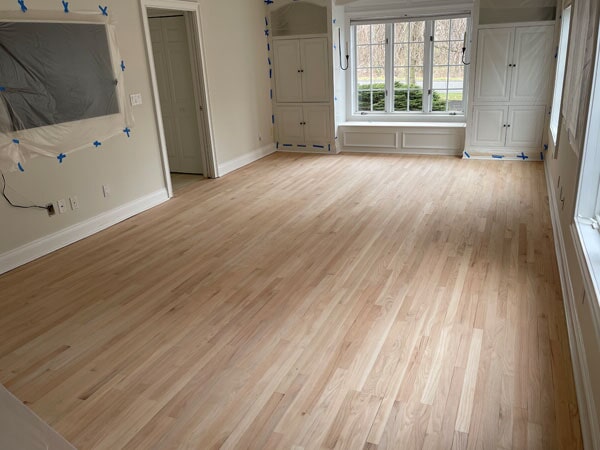
Wood species, in plain English
The species decides how a floor looks, how it takes stain, and how it lives with your household. Here is the honest rundown of what we sell and install, species by species.
Full boards at the showroom, samples on your own floor
| Species | Janka hardness | Color | Best with |
|---|---|---|---|
| White oak | 1360 | Warm brown-gray tones, long clean grain, and the closed grain that made it the barrel wood of choice for centuries. | Main rooms, stairs, and any floor you want quiet enough to let the furniture talk. |
| Red oak | 1290 | The classic American floor: a rosy, open grain most people picture when they picture hardwood. | Colonials and center-hall homes all over this area: it is what is in the floor already, more often than not. |
| Maple | 1450 | Pale cream color with a tight, subtle grain. | Kitchens, modern spaces, and anyone who wants the brightest floor on the rack. |
| Hickory | 1820 | Wild, two-toned grain: deep browns against pale blonde in the same board. | Cabins, farmhouses, and busy households: it hides real life better than any species on the rack. |
| Walnut | 1010 | Deep chocolate brown straight off the mill, with a satiny, flowing grain. | Statement rooms and homeowners who want the dark floor without a drop of stain. |
| Brazilian cherry (Jatoba) | 2350 | Reddish-amber exotic that deepens with light exposure over its first year. | Formal rooms and dramatic entries. One of the hardest floors commonly installed. |
Janka: pounds of force to embed a steel ball halfway; the standard dent-resistance yardstick.
White oak
The look
Warm brown-gray tones, long clean grain, and the closed grain that made it the barrel wood of choice for centuries.
With stain
Takes stain evenly and calmly; the reason it’s the favorite for modern naturals and grays. Also the traditional choice for quarter-sawn figure.
Where it fits
Main rooms, stairs, and any floor you want quiet enough to let the furniture talk.
Red oak
The look
The classic American floor: a rosy, open grain most people picture when they picture hardwood.
With stain
The open grain takes stain boldly. Stained dark, the red undertone mostly disappears; stained light, it warms the whole room. One customer went from "orange" red oak to dark walnut with four samples.
Where it fits
Colonials and center-hall homes all over this area: it is what is in the floor already, more often than not.
Maple
The look
Pale cream color with a tight, subtle grain. The same wood as gym courts, on purpose.
With stain
Tight grain takes stain unevenly by nature, which reads as character on sports floors and can look blotchy on living rooms. Usually worn natural or light.
Where it fits
Kitchens, modern spaces, and anyone who wants the brightest floor on the rack.
Hickory
The look
Wild, two-toned grain: deep browns against pale blonde in the same board. No two floors alike.
With stain
Usually worn natural, because the grain already does what stain would. Takes dark stain when you want drama.
Where it fits
Cabins, farmhouses, and busy households: it hides real life better than any species on the rack.
Walnut
The look
Deep chocolate brown straight off the mill, with a satiny, flowing grain.
With stain
Usually worn natural, because the wood is the color people try to stain other wood toward. Softer than oak, which shows dents sooner.
Where it fits
Statement rooms and homeowners who want the dark floor without a drop of stain.
Brazilian cherry (Jatoba)
The look
Reddish-amber exotic that deepens with light exposure over its first year. Through IndusParquet, the exotics line.
With stain
Dense grain, usually worn natural and let the color mature. Very hard underfoot.
Where it fits
Formal rooms and dramatic entries. One of the hardest floors commonly installed.
White oak versus red oak
The question we hear most, so here is the straight answer. Red oak has a rosy undertone and a more open grain; white oak is browner, quieter, and its closed grain takes stain with a more even hand. If you want a modern, calm, gray-leaning floor: white oak. If you want the classic warm American floor: red oak.
Stain changes the conversation. Dark stains pull both species close together; light stains let each species' undertone show. That is exactly why we sample on your floor instead of pointing at a chip. How stain sampling works →
Species questions
Which species should I choose?
Start with two honest questions: how much character do you want the wood itself to have (oak is calm, hickory is loud), and how does your household treat floors (harder species shrug off more). Then come see full boards: species reads differently at room scale than it does online.
What is the Janka hardness number?
A standard test of how resistant a wood is to denting, measured in pounds of force. Higher is harder. It is a useful yardstick, not a promise: finish and care matter as much as the number.
Do you stock all of these?
The mills we carry make these species in changing combinations through the year. Call or visit the showroom for what is on the rack today; whatever you choose, stain sampling happens on your own floor before any commit.
Ready for a free in-home estimate?
Accurate, professional, and at your house. Monday to Friday, 8:00 AM to 3:30 PM.