
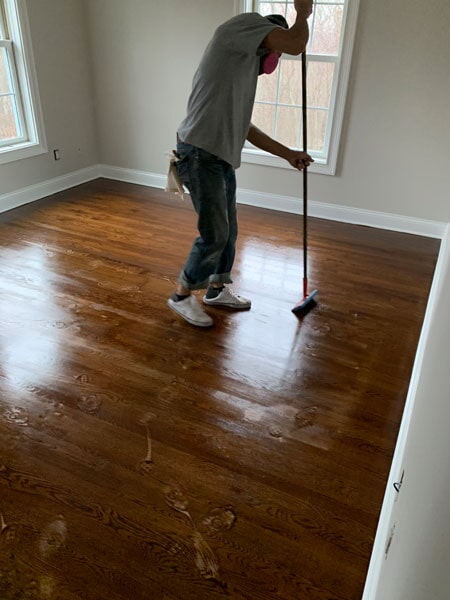
Floor stain colors
The color of your floors for the next few decades gets decided before we start, and it gets decided on your wood, not on a store chip. Here is how sampling works and what the choices actually look like.
Samples on your own floor, before any commit
Why we sample on your floor
The same stain reads differently on every floor: red oak pushes color warmer, white oak cools it down, maple drinks stain unevenly, and the light in your rooms changes all of it again. A chip in a store tells you almost nothing about how the color lands on 800 square feet of your own wood.
So the process is physical: we sand a small area of your floor to bare wood and apply the candidate stains side by side, on the boards you will actually live with. You look at them in your own morning light and your own evening light, and you pick.
Kelly Sanders' job is the shorthand version: orange red oak, four samples, dark walnut, floors and stairs matching.
The full sampling walkthrough →The color range
Natural
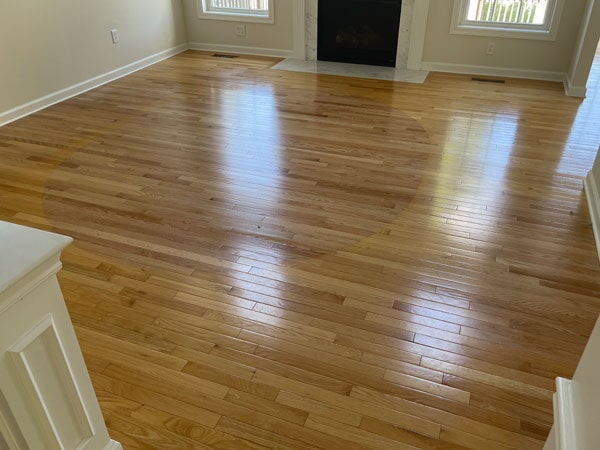
No stain, just the protective finish over bare wood: pale amber on oak, cream on maple. Calm, bright, and true to the species.
Amber and golden browns
The classic warm floor. Popular in colonials, and honest about what it is: a traditional oak floor.
Medium browns
The middle path: warm but quieter, hides life well, and ages the most gracefully of the range.
Dark walnut
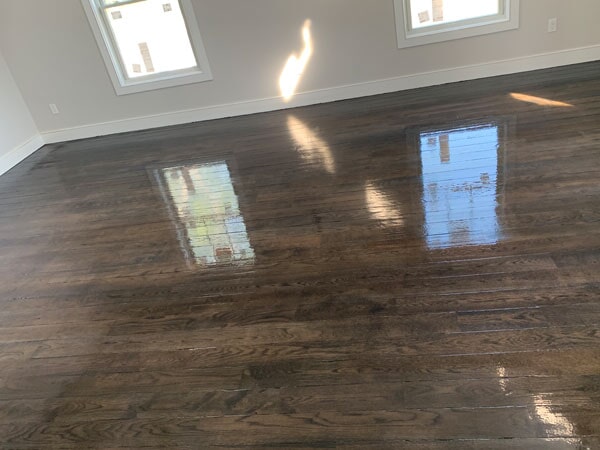
Deep brown, near-black in low light. The transformation job: this is what orange red oak becomes when the samples say so.
Species changes everything
The same can of stain is a different color on different wood. Red oak's rosy undertone warms every stain; white oak cools it; maple's tight grain takes color in streaks; walnut barely needs stain because the wood already is the color.
This is why the samples happen on your floor, with your species, before anything is committed. Species by species, honestly: the wood species guide →
What it looks like done
Stain questions
Should I stain my floors or go natural?
Both are real answers. Natural (just the finish, no stain) shows the wood as it is and ages gracefully; stain gives you control over the color. If your wood is already a color you like, going natural is cheaper and one less variable. If you want a specific look, samples on your own floor settle it in one visit.
Can you match my existing floors?
Usually, yes: we stain a sample on your floor, next to the existing wood, and adjust until it reads as one floor. Additions and repairs matched to century-old wood is normal work for this shop.
What colors are popular right now?
We will be honest: we sample rather than chase trends. That said, what is leaving the shop most is white oak worn natural or lightly whitewashed, and darker walnut browns on red oak. Both start the same way: samples, on your floor, before you commit.
How long do stains last?
The stain is inside the floor, under the protective finish coats, for as long as the floor exists. When the finish wears decades from now, refinishing brings it back; the color stays yours. A fully stained floor can also be resanded to bare wood and changed completely, which is how orange floors become walnut.
Ready for a free in-home estimate?
Accurate, professional, and at your house. Monday to Friday, 8:00 AM to 3:30 PM.